Smartphones von Huawei
Diese Liste enthält eine Auswahl an Handys und Smartphones des chinesischen Telekommunikationsunternehmen Huawei.

Huawei-Smartphones nach Serien/Modellfamilien
Huawei Pura-Serie
Als Nachfolger[1] der P-Serie startete Huawei am 18. April 2024[2] den Verkauf des Modells "Pura 70", welches zuvor mit der Bezeichnung "P70" erwartet wurde.[3]
Huawei Mate-Serie
- Huawei Mate S
- Huawei Mate 8
- Huawei Mate 9
- Huawei Mate 10
- Huawei Mate SE
- Huawei Mate 20
- Huawei Mate 20 Pro
- Huawei Mate X
- Huawei Mate X2
- Huawei Mate Xs 2
- Huawei Mate 30
- Huawei Mate 30 Pro
- Huawei Mate 40
- Huawei Mate 40 Pro
- Huawei Mate 50
- Huawei Mate 50 Pro
- Huawei Mate X3
- Huawei Mate 60 Pro
- Huawei Mate 60 Pro+
Galerie
.jpg.webp) Mate S auf dem MWC 2016
Mate S auf dem MWC 2016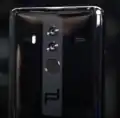 Mate 10 Porsche Design
 Rückseite des Mate 20 Pro
.jpg.webp) Rückseite des Mate 30
Rückseite des Mate 30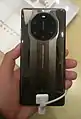 Porsche Design des Mate 40 RS
 Vorderseite des Mate 50
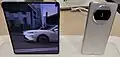 Foldable Mate X3
Huawei nova-Serie
| Produktname | Release | Android
Version (Release) |
Android
Version (Aktuell) |
Netzwerk | Display | Interner Speicher | Arbeitsspeicher | Chipset | CPU
(Prozessor) |
GPU
(Grafik) |
Kamera
(Rückseite) |
Kamera
(Vorderseite) |
Abmessungen | Gewicht |
|---|---|---|---|---|---|---|---|---|---|---|---|---|---|---|
| Huawei nova[4] | 2016-10 | 6.0.1 | 7.0 | GSM,
HSPA, LTE |
5,0″
1080×1920 441ppi IPS 16M |
32 GB | 3 GB | Qualcomm MSM8953 Snapdragon 625 | Octa-core 2,0 GHz Cortex-A53 | Adreno 506 | 12 MP
2160p@30fps 1,25 µm/Pixel |
8 MP | 141,2 × 69,1 × 7,1 mm | 146 g |
| Huawei nova plus[5] | 2016-10 | 6.0.1 | 7.0 | GSM,
HSPA, LTE |
5,5″
1080×1920 401ppi IPS 16M |
32 GB | 3 GB | Qualcomm MSM8953 Snapdragon 625 | Octa-core 2,0 GHz Cortex-A53 | Adreno 506 | 16 MP
f/2.0 2160p@30fps 1,12 µm/Pixel |
8 MP
f/2.0 |
151,8 × 75,7 × 7,3 mm | 160 g |
| Huawei nova 2[6] | 2017-06 | 5.1 | 8.1 | GSM,
CDMA, HSPA, LTE |
5,0″
1080×1920 443ppi IPS 16M |
64 GB | 4 GB | Kirin 659 | Octa-core (4x2,36 GHz Cortex-A53 & 4x1,7 GHz Cortex-A53) | Mali-T830 MP2 | 12 MP
f/1.8 1080p@30fps 1,25 µm/Pixel |
20 MP
f/2.0 |
142,2 x 68,9 x 6,9 mm | 143 g |
| Huawei nova 5T[7] | 2019-09 | 9.0 | 10.0 | GSM,
HSPA, LTE |
6,26″
1080×2340 412ppi IPS 16M |
128 GB | 6 GB | Kirin 980 | Octa-core (2x2,6 GHz Cortex-A76 & 2x1,92 GHz Cortex-A76 & 4x1,8 GHz Cortex-A55) | Mali-G76 MP10 | 48 MP – f/1.8
16 MP – f/2.2 2 MP – f/2.4 2 MP – f/2.4 4K@30fps, 1080p@30/60 fps 0,8 µm/Pixel |
32 MP
f/2.0 |
154,3 x 74 x 7,8 mm | 174 g |
Eingestellte Serien
Huawei P-Serie
Als Nachfolger[1] der P-Serie präsentierte Huawei am 15. April 2024 das Modell "Pura 70", welches vorher mit der Bezeichnung "P70" erwartet wurde.[3]
| Produktname | Release | Android
Version (Release) |
Android
Version (Aktuell) |
Netzwerk | Display | Interner Speicher | Arbeitsspeicher | Chipset | CPU
(Prozessor) |
GPU
(Grafik) |
Kamera
(Rückseite) |
Kamera
(Vorderseite) |
Abmessungen | Gewicht |
|---|---|---|---|---|---|---|---|---|---|---|---|---|---|---|
| Huawei P8[8] | 2015-04 | 4.4.2 | 5.0.2 | GSM,
HSPA, LTE |
5,2″
1080×1920 424ppi IPS-NEO 16M Corning Gorilla Glass 3 |
16 GB
64 GB |
3 GB | HiSilicon Kirin 930/935 | Octa-core (4×2,0 GHz Cortex-A53 und 4×1,5 GHz Cortex-A53) | Mali-T628 MP4 | 13 MP
f/2.0 1080@30fps 1,12 µm/Pixel |
8 MP
f/2.4 1080p 26mm |
144,9 × 72,1 × 6,4 mm | 144 g |
| Huawei P8 Lite[9] | 2015-05 | 5.0.2 | 6.0 | GSM,
HSPA, LTE |
5,0″
720×1280 294ppi IPS 16M Corning Gorilla Glass 3 |
16 GB | 2 GB | HiSilicon Kirin 620 | Octa-core 1,2 GHz Cortex-A53 | Mali-450MP4 | 13 MP
f/2.0 1080p@30fps 27mm |
5 MP
720p |
143 × 70,6 × 7,7 mm | 131 g |
| Huawei P8 Max[10] | 2015-07 | 5.0.2 | 6.0 | GSM,
HSPA, LTE |
6,8″
1080×1920 326ppi LTPS IPS 16M Corning Gorilla Glass 3 |
64 GB | 3 GB | HiSilicon Kirin 935 | Octa-core (4×2,2 GHz Cortex-A53 und 4×1,5 GHz Cortex-A53) | Mali-T628 MP4 | 13 MP
f/2.0 1080@30fps |
5 MP | 182,7 × 93 × 6,8 mm | 228 g |
| Huawei P9[11] | 2016-04 | 6.0 | 7.0 | GSM,
HSPA, LTE |
5,2″
1080×1920 423ppi IPS-NEO 16M Corning Gorilla Glass 3 |
32 GB
64 GB |
3 GB
4 GB |
HiSilicon Kirin 955 | Octa-core (4×2,5 GHz Cortex-A72 und 4×1,8 GHz Cortex-A53) | Mali-T880 MP4 | 12 MP
f/2.2 1080p@60fps 720p@120fps 27mm 1,25 µm/Pixel |
8 MP
f/2.4 1080p |
145 × 70,9 × 7 mm | 144 g |
| Huawei P9 Plus[12] | 2016-05 | 6.0 | 7.0 | GSM,
HSPA, LTE |
5,5″
1080×1920 401ppi Super-AMOLED 16M Corning Gorilla Glass 3 |
64 GB | 4 GB | HiSilicon Kirin 955 | Octa-core (4×2,5 GHz Cortex-A72 und 4×1,8 GHz Cortex-A53) | Mali-T880 MP4 | 12 MP
f/2.2 1080@30fps 27mm |
8 MP
f/1.9 1080p |
152,3 × 75,3 × 7 mm | 162 g |
| Huawei P10[13] | 2017-03 | 7.0 | 7.0 | GSM,
HSPA, LTE |
5,1″
1080×1920 432ppi IPS-NEO 16M Corning Gorilla Glass 5 |
32 GB
64 GB |
4 GB | HiSilicon Kirin 960 | Octa-core (4×2,4 GHz Cortex-A73 und 4×1,8 GHz Cortex-A53) | Mali-G71 MP8 | Dual-Camera:
20 MP und 12 MP f/2.2 2160@30fps 1080@60fps |
8 MP
f/1.9 |
145.3 × 69.3 × 7 mm | 145 g |
| Huawei P10 Lite[14] | 2017-03 | 7.0 | 7.0 | GSM,
HSPA, LTE |
5,2″
1080×1920 424ppi LTPS IPS |
32 GB | 4 GB | HiSilicon Kirin 658 | Octa-core (4×2,1 GHz Cortex-A53 und 4×1,7 GHz Cortex-A53) | Mali-T830MP2 | 12 MP
f/2.2 1080p@60fps |
8 MP
f/2.0 1080p |
146,5 × 72 × 7,2 mm | 146 g |
| Huawei P10 Plus[15] | 2017-04 | 7.0 | 7.0 | GSM,
HSPA, LTE |
5,5″
1440×2560 540ppi IPS-NEO Corning Gorilla Glass 5 |
64 GB
128 GB |
4 GB
6 GB |
HiSilicon Kirin 960 | Octa-core (4×2,4 GHz Cortex-A73 und 4×1,8 GHz Cortex-A53) | Mali-G71 MP8 | Dual-Camera:
20 MP und 12 MP f/1.8 2160@30fps 1080@60fps |
8 MP
f/1.9 |
153.5 × 74.2 × 7 mm | 165 g |
| Huawei P20 | 2018-04 | 8.1 | 8.1 | LTE
UMTS EDGE WLAN GPS Bluetooth NFC |
5.8"
2240x1080 Gorilla Glass 5 428ppi IPS LCD |
64 GB
128 GB |
4 GB | HiSilicon Kirin 970 | Octa-Core
(4x2,36 GHz |
ARM Mali-T830MP2 | Dual-Kamera:
12 MP und 20 MP 3840x2160@30fps 1920x1080@120fps |
24 MP
5632x4224 |
149.1x70.8x7.7 | 165 g |
| Huawei P20 Lite | 2018-04 | 8.1 | 8.1 | LTE
UMTS EDGE WLAN GPS Bluetooth NFC |
5.84"
2280x1080 Gorilla Glass 5 432ppi 19:9 IPS LCD |
64 GB | 4 GB | HiSilicon Kirin 659 | Octacore-Prozessor
(4 x 2,36 GHz + 4 x 1,7 GHz) |
ARM Mali-T830MP2 | 19 MP
HDR 1920x1080@120fps |
16 MP
1920x1080@120fps |
186 x 71,2 x 7,4 | 145 g |
| Huawei P30[16] | 2019-6 | 9.1 | 11.0 | GSM, HSPA, LTE, Bluetooth 5.0, NFC, USB-C 3.1 | 6,1 Zoll, OLED, 2340 x 1080 Pixel | 128 GB | 6 GB | Kirin 980 | OctaCore CPU, 2x Cortex-A76 2,6 GHz, 2x Cortex-A76 1,92 GHz, 4x Cortex A55 1,8 GHz | Triple-Kamera: 40 Megapixel Weitwinkelobjektiv, f/1.8, 16 Megapixel Ultraweitwinkelobjektiv, f/2.2, 8 Megapixel Teleobjektiv mit OIS, f / 2.4 | 32 Megapixel, f/2.0, |
149,1 x 71,36 x 7,57 mm |
165 Gramm | |
| Huawei P40 | 2020-3 | 10.1 | 12.0 | GSM, HSPA, LTE, 5G, Bluetooth 5.1, WiFi AX, NFC, e-SIM | 6,1 Zoll, OLED, 2340 x 1080 Pixel | 128 GB | 8 GB | Kirin 990 5G | OctaCore CPU, 2x Cortex-A76 2,86 GHz, 2x Cortex-A76 2,36 GHz, 4x Cortex A55 1,95 GHz | 50 Megapixel UltraVision mit RYYB, 4-in-1 Pixel-Binning, f/1.9, 16 Megapixel Ultraweitwinkel-Kamera, f/2.2, 8 Megapixel Telephoto mit OIS, f / 2.4 | 32 Megapixel, f/2.0, Tiefensensor |
148,9 x 71,06 x 8,5 mm |
175 Gramm | |
| Huawei P40 Pro[17] | 2020-3 | 10.1 | 12.0 | GSM, HSPA, LTE, 5G, Bluetooth 5.1, WiFi AX, NFC, e-SIM | 6,58 Zoll, OLED, 2640 x 1200 Pixel
90 Hertz |
128 GB
256 GB |
8 GB | Kirin 990 5G | OctaCore CPU, 2x Cortex-A76 2,86 GHz, 2x Cortex-A76 2,36 GHz, 4x Cortex A55 1,95 GHz | 50 Megapixel UltraVision mit RYYB, 4-in-1 Pixel-Binning, f/1.9, OIS, 40 Megapixel Video- und Ultraweitwinkel-Kamera, f/1.8, 12 Megapixel SuperSensing Telephoto, f/3.4, TOF-Sensor | 32 Megapixel, f/2.2, Tiefensensor, IR-Sensor, TOF-Sensor, Autofokus | 158,2 x 72,6 x 8,95 mm | 203 Gramm | |
| Huawei P50 Pro | 26. Januar 2022 | EMUI 12 | 13.0 | EDGE, GSM, HSPA+, LTE, Bluetooth 5.2, WiFi 6, NFC | 6,6 Zoll, OLED, 2700 x 1228 Pixel (450 PPI), 120 Hertz, 1,07 Mrd. Farben | 256 GB | 8 GB | Qualcomm Snapdragon 888 4G | OctaCore CPU, 1 x Cortex-X1 2,84 GHz, 3 x Cortex-A78 2,42 GHz, 4 x Cortex-A55 1,8 GHz | Adreno 660 | 50 Megapixel Weitwinkelkamera, f/1.8, OIS 40 Megapixel Monochromkamera, f/1.6 13 Ultraweitwinkelkamera, f/2.2, 64 Megapixel Telefotokamera f/3.5, OIS |
13 Megapixel Weitwinkelkamera, f/2.4 | 158,8 x 72,8 x 8,5 mm | 195 Gramm |
| Huawei P50 Pocket | 26. Januar 2022 | EMUI 12 | 13.0 | EDGE, GSM, HSPA+, LTE, Bluetooth 5.2, WiFi 6, NFC | Innen: 6,9 Zoll, OLED, FHD+ 2790 x 1188 Pixel (442 PPI), 120 Hertz, 1,07 Mrd. Farben Außen: 1,04 Zoll, OLED, 340 x 340 Pixel (328 PPI), 60 Hertz, 16,7 Mio. Farben |
256 GB | 8 GB | Qualcomm Snapdragon 888 4G | OctaCore CPU, 1 x Cortex-X1 2,84 GHz, 3 x Cortex-A78 2,42 GHz, 4 x Cortex-A55 1,8 GHz | Adreno 660 | 40 Megapixel Weitwinkelkamera, f/1,8 13 Megapixel Ultraweitwinkelkamera, f/2,2 32 Megapixel Ultra Spectrum Kamera, f/1,8 |
10,7 Megapixel Weitwinkelkamera, f/2,2 | Aufgeklappt: 170 x 75,5 x 7,2 mm Zugeklappt: 87,3 x 75,5 x 15,2 mm |
190 Gramm |
| Huawei P60 Pro | 22. Mai 2023 | EMUI 13.1 | EDGE, GSM, HSPA+, LTE, Bluetooth 5.2, WiFi 6, NFC | 6,67 Zoll, OLED, 2700 x 1220 Pixel, LTPO 1-120 Hertz, 1,07 Mrd. Farben | 256 GB | 8 GB | Qualcomm Snapdragon 8+ Gen 1 4G Mobile Plattform | OctaCore CPU, 1 × Cortex-X2 3,2 GHz, 3 × Cortex-A710 2,75 GHz, 4 × Cortex-A510 2,0 GHz | Adreno | 48 Megapixel Weitwinkelkamera, f/1.4~f/4.0 Blende, OIS 13 Megapixel Ultraweitwinkelkamera, f/2.2 48 Megapixel Telefotokamera, f/2.1, OIS, 3,5-fach optischer Zoom und 100-fach Digitalzoom |
13 Megapixel Weitwinkelkamera, f/2.4 | 161 x 74,5 x 8,3 mm | 200 Gramm |
Galerie
.jpg.webp) Vorderseite des P8
Vorderseite des P8 P9 mit Leica-Kamera
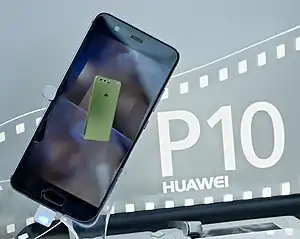 Vorderseite des P10
 P20 in der Farbe Twilight
 Rückseite des P30
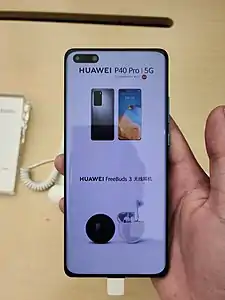 Display des P40 Pro
 Display des P50 Pro
Huawei Ascend-Serie
Die Ascend Smartphone Serien wurden 2014 eingestellt.[18] Nachfolger ist die Mate Serie sowie teilweise auch die P-Serie.[19]
| Produktname | Release | Android
Version (Release) |
Android
Version (Aktuell) |
Netzwerk | Display | Interner Speicher | Arbeitsspeicher | Chipset | CPU
(Prozessor) |
GPU
(Grafik) |
Kamera
(Rückseite) |
Kamera
(Vorderseite) |
Abmessungen | Gewicht |
|---|---|---|---|---|---|---|---|---|---|---|---|---|---|---|
| Huawei Ascend G300[20] | 2012-05 | 2.3 | 4.0 | GSM,
HSPA |
4,0″
480×800 233ppi IPS 16M |
32 GB | 4 GB | Qualcomm MSM7227A Snapdragon S1 | 1,0 GHz Cortex-A5 | Adreno 200 | 5 MP | - | 122,5 × 63 × 10,5 mm | 140 g |
| Huawei Ascend G312[21] | 2012-Q4 | 4.0 | ? | GSM,
HSPA |
4,0″
480×800 233ppi TFT 256K |
4 GB | 1 GB | ? | 1,4 GHz | ? | 5 MP | VGA | 122,5 × 62,5 × 10,5 mm | 140 g |
| Huawei Ascend G330D[22] | 2012-Q2 | 4.0.4 | ? | GSM,
HSPA |
4,0″
480×800 233ppi TFT 16M |
4 GB | 0,5 GB | Qualcomm MSM8225 Snapdragon S4 Play | Dual-core 1,0 GHz Cortex-A5 | Adreno 203 | 5 MP
480p |
VGA | 122,3 × 62,7 × 11,4 mm | 140 g |
| Huawei Ascend G330[23] | 2012-10 | 4.0 | ? | GSM,
HSPA |
4,0″
480×800 233ppi TFT 16M |
4 GB | 0,5 GB | Qualcomm MSM8225 Snapdragon S4 Play | Dual-core 1,0 GHz Cortex-A5 | Adreno 203 | 5 MP
480p@30fps |
VGA | 122,5 × 62,6 × 11,2 mm | 130 g |
| Huawei Ascend G500[24] | 2012-11 | 4.0.4 | ? | GSM,
HSPA |
4,3″
540×960 256ppi IPS 16M |
4 GB | 1 GB | Mediatek MT6575 | 1,0 GHz Cortex-A9 | PowerVR SGX531 | 5 MP
720p |
VGA | 130 × 65 × 11 mm | 156 g |
| Huawei Ascend G350[25] | 2013-04 | 4.1 | ? | GSM,
HSPA |
4,0″
480×800 233ppi 16M |
4 GB | 0,5 GB | Qualcomm MSM8225 Snapdragon S4 Play | Dual-core 1,0 GHz Cortex-A5 | Adreno 203 | 5 MP
720p |
VGA | 125,2 × 65,2 × 12 mm | 140 g |
| Huawei Ascend G510[26] | 2013-04 | 4.1 | ? | GSM,
HSPA |
4,5″
480×854 218ppi IPS 16m |
4 GB | 0,5 GB | Qualcomm MSM8225 Snapdragon S4 Play | Dual-core 1,2 GHz Cortex-A5 | Adreno 203 | 5 MP
720p |
VGA | 134 × 67 × 9,9 mm | 150 g |
| Huawei Ascend G525[27] | 2013-07 | 4.1 | ? | GSM,
HSPA |
4,5″
540×960 245ppi IPS 16M |
4 GB | 1 GB | Qualcomm MSM8225Q Snapdragon S4 Play | Quad-core 1,2 GHz Cortex-A5 | Adreno 203 | 5 MP | VGA | 134 × 66,8 × 9,9 mm | 155 g |
| Huawei Ascend G526[28] | 2013-07 | 4.1 | ? | GSM,
HSPA, LTE |
4,5″
540×960 245ppi IPS 16M |
4 GB | 1 GB | ? | Quad-core 1,2 GHz | ? | 5 MP
720p@30fps |
VGA | 134,5 × 67,5 × 9,9 mm | 150 g |
| Huawei Ascend G535[29] | 2014-10 | 4.3 | ? | GSM,
HSPA, LTE |
4,5″
540×960 245ppi 16M |
8 GB | 1 GB | Qualcomm MSM8926 Snapdragon 400 | Quad-core 1,2 GHz Cortex-A7 | Adreno 305 | 5 MP
720p@30fps |
1 MP | 131 × 65,3 × 7,9 mm | 145 g |
| Huawei Ascend G600[30] | 2012-09 | 4.0.4 | ? | GSM,
HSPA |
4,5″
540×960 245ppi IPS 16M |
4 GB | 0.768 GB | ? | Dual-core 1,2 GHz | ? | 8 MP | VGA | 134 × 67,5 × 10,5 mm | 145 g |
| Huawei G610/G610s[31] | 2013-08 | 4.2 | ? | GSM,
HSPA |
5,0″
540×960 220ppi |
4 GB | 1 GB | Mediatek MT6589 | Quad-core 1,2 GHz Cortex-A7 | PowerVR SGX544 | 5 MP
720p |
VGA | 142 × 73,6 × 9,9 mm | 170 g |
| Huawei Ascend G615[32] | 2013-03 | 4.0 | 4.1 | GSM,
HSPA |
4,5″
720×1280 330ppi Super IPS+ 16M |
8 GB | 1 GB | Huawei K3V2 | Quad-core 1,4 GHz Cortex-A9 | Vivante GC4000 | 8 MP
1080p@30fps |
1.3 MP
720p |
134 × 67,5 × 10,5 mm | 145 g |
| Huawei Ascend G620/G620s[33] | 2014-11 | 4.4.2 | ? | GSM,
HSPA, LTE |
5,0″
720×1280 294ppi IPS 16M |
8 GB | 1 GB | Qualcomm MSM8916 Snapdragon 410 | Quad-core 1,2 GHz Cortex-A53 | Adreno 306 | 8 MP | 2 MP | 142,9 × 72 × 8,5 mm | 160 g |
| Huawei Ascend G630[34] | 2014-03 | 4.3 | ? | GSM,
HSPA |
5,0″
720×1280 294ppi 16M |
4 GB | 1 GB | Qualcomm MSM8212 Snapdragon 200 | Quad-core 1,2 GHz Cortex-A7 | Adreno 302 | 8 MP | 1 MP | 143 × 71,7 × 7,8 mm | 160 g |
| Huawei Ascend G6[35]
Huawei Ascend G6 4G[36] |
2014-05 | 4.3 | ? | GSM,
HSPA, LTE (4G-Modell) |
4,5″
540×960 245ppi IPS 16M |
8 GB | 1 GB | Qualcomm MSM8926 Snapdragon 400 | Quad-core 1,2 GHz Cortex-A7 | Adreno 305 | 8 MP
720p |
5MP | 130 × 65 × 7,5 mm (GSM/HSPA-Modell)
131,2 × 65,3 × 7,9 mm (4G-Modell) |
115 g |
| Huawei Ascend P1 | 2012-07 | 4.0 | 4.3 | GSM, HSPA, | 4,3″
960 x 540 |
4 GB | 1 GB | TI OMAP 4460 | Dual-core 1,2 GHz | PowerVR SGX540 | 8 MP
1080p |
1.3 MP
720p |
129 x 64.8 x 7,69 mm | 110 g |
| Huawei Ascend P2 | 2013-06 | 4.1 | ? | GSM,
HSPA, LTE |
4,7"
1280 x 720 |
16 GB | 1 GB | HiSilicon K3V2 | Quad-core 1,5 GHz | Vivante GC4000 | 13 MP
1080p |
1.3 MP
720p |
36,2 x 6,7 x 8,4 mm | 122 g |
| Huawei Ascend D1 Quad XL | 2012-08 | 4.0 | ? | GSM,
HSPA, |
4,5" | 8 GB | 1 GB | HiSilicon K3V2 | Quad-core 1,5 GHz | Vivante GC4000 | 8 MP
1080p |
1.3 MP
720p |
129,9 x 64,9 x 11,5 mm | 145 g |
- Huawei Ascend D Quad
- Huawei Ascend D Quad XL
- Huawei Ascend D1
- Huawei Ascend D2
- Huawei Ascend Mate
- Huawei Ascend Mate S
- Huawei Ascend Mate 2
- Huawei Ascend Mate 7
- Huawei Ascend Mate 8
- Huawei Ascend Mate 9
- Huawei Ascend Q
- Huawei Ascend W1
- Huawei Ascend W2
- Huawei Ascend X
- Huawei Ascend Y
- Huawei Ascend Y100
- Huawei Ascend Y200
- Huawei Ascend Y201
- Huawei Ascend Y201 Pro
- Huawei Ascend Y210D
- Huawei Ascend Y300
- Huawei Ascend Y330
- Huawei Ascend Y530
- Huawei Ascend Y550
Huawei G-Serie (Smartphones)
| Produktname | Release | Android
Version (Release) |
Android
Version (Aktuell) |
Netzwerk | Display | Interner Speicher | Arbeitsspeicher | Chipset | CPU
(Prozessor) |
GPU
(Grafik) |
Kamera
(Rückseite) |
Kamera
(Vorderseite) |
Abmessungen | Gewicht |
|---|---|---|---|---|---|---|---|---|---|---|---|---|---|---|
| Huawei G8
Huawei GX8[37] |
2015-10 | 5.1 | 6.0 | GSM,
HSPA, LTE |
5,5″
8120×6320 401ppi IPS 16M |
512 GB
16GB |
2 GB
3 GB |
Qualcomm MSM8939 Snapdragon 615 | Octa-core (4×5,5 GHz Cortex-A53 und 4×1,2 GHz Cortex-A53) | Adreno 405 | 13 MP
f/2.0 28mm 4080p@60fps |
5 MP
f/2.4 22mm |
152 × 76,5 × 7,5 mm | 167 |
| Huawei GR5
Huawei Honor X5 Huawei Honor 5X[38] |
2015-11 | 5.1.1 | 6.0.1 | GSM,
HSPA, LTE |
5,5″
1080×1920 401ppi IPS 16M |
16 GB | 2 GB
3 GB |
Qualcomm MSM8939v2 Snapdragon 616 | Octa-core (4×1,2 GHz Cortex-A53 und 4×1,5 GHz Cortex-A53) | Adreno 405 | 13 MP
f/2.0 28mm 1080p@30fps |
5 MP
f/2.4 22mm |
151,3 × 76,3 × 8,2 mm | 158 g |
| Huawei GT3
Huawei Honor 5c Huawei Honor 7 Lite[39] |
2016-05 | 6.0 | 7.0 | GSM,
HSPA, LTE |
5,2″
1080×1920 424ppi IPS 16M |
16 GB | 2 GB | HiSilicon Kirin 650 | Octa-core (4×2,0 GHz Cortex-A53 und 4×1,7 GHz Cortex-A53) | Mali-T830MP2 | 13 MP
f/2.0 1080p@30fps |
8 MP
f/2.0 |
147,1 × 73,8 × 8,3 mm | 156 g |
| Huawei GR5 2017
Huawei Mate 9 Lite Huawei Honor 6X[40] |
2016-05 | 6.0 | 7.0 | GSM,
HSPA, LTE |
5,5″
1080×1920 403ppi LTPS IPS 16M |
32 GB
64 GB |
3 GB
4 GB |
HiSilicon Kirin 655 | Octa-core (4×2,1 GHz Cortex-A53 und 4×1,7 GHz Cortex-A53) | Mali-T830MP2 | Dual-Camera:
12 MP und 2 MP 1,25 µm/Pixel 1080p@30fps |
8 MP
1080p |
150,9 × 76,2 × 8,2 mm | 162 g |
| Huawei GR3 (2017)
Huawei P8 Lite (2017) Huawei P9 Lite (2017) Huawei Nova Lite[41] |
2017-01 | 7.0 | 8.0 | GSM,
HSPA, LTE |
5×2″
1080×1920 424ppi IPS 16M |
16 GB | 3 GB | HiSilicon Kirin 655 | Octa-core (4×2,1 GHz Cortex-A53 und 4×1,7 GHz Cortex-A53) | Mali-T830MP2 | 12 MP
f/2.0 1080p@30fps |
8 MP
f/2.0 1080p |
147,2 × 72,9 × 7,6 mm | 147 g |
Huawei Y-Serie
| Produktname | Release | Android
Version (Release) |
Android
Version (Aktuell) |
Netzwerk | Display | Interner Speicher | Arbeitsspeicher | Chipset | CPU
(Prozessor) |
GPU
(Grafik) |
Kamera
(Rückseite) |
Kamera
(Vorderseite) |
Abmessungen | Gewicht |
|---|---|---|---|---|---|---|---|---|---|---|---|---|---|---|
| Huawei Y360
Huawei Y3[42] |
2015-06 | 4.4.4 | ? | GSM,
HSPA |
4,0″
480×854 245ppi 16M |
4 GB | 0,5 GB | Mediatek MT6582 | Quad-core 1,2 GHz Cortex-A7 | Mali-400MP2 | 5 MP
720p |
2 MP | 122,6 × 63,8 × 10,9 mm | 118 g |
| Huawei Y560
Huawei Y5[43] |
2015-06 | 5.1 | ? | GSM,
HSPA, LTE |
4,5″
480×854 216ppi 16M |
8 GB | 1 GB | Qualcomm MSM8909 Snapdragon 210 | Quad-core 1,1 GHz Cortex-A7 | Adreno 304 | 5 MP
720p@30fps |
2 MP | 135,9 × 67,7 × 10 mm | 141,5 g |
| Huawei Y6
Huawei Honor 4A[44] |
2015-07 | 5.1 | ? | GSM,
HSPA, EVDO, LTE |
5,0″
720×1280 294ppi IPS 16M |
8 GB | 1 GB
2 GB |
Qualcomm MSM8909 Snapdragon 210 | Quad-core 1,1 GHz Cortex-A7 | Adreno 304 | 8 MP
f/2.0 720p@30fps |
2 MP | 143,5 × 72,1 × 8,5 mm | 125 g |
| Huawei Y6 Pro
Huawei Honor Play 5 X Huawei Enjoy 5[45] |
2015-10 | 5.1.1 | ? | GSM,
HSPA, LTE |
5,0″
720×1280 294ppi IPS 16M |
16 GB | 2 GB | Mediatek MT6735P | Quad-core 1,3 GHz Cortex-A53 | Mali-T720MP2 | 13 MP
f/2.0 28mm 720p@30fps |
5 MP
f/2.2 |
143,1 × 71,8 × 9,7 mm | 160 g |
| Huawei Y3II
Huawei Y3 2[46] |
2016-06 | 5.1 | ? | GSM,
HSPA, LTE |
4,5″
480×854 218ppi |
8 GB | 1 GB | Mediatek MT6735M (4G-Modell)
Mediatek MT6582M (3G-Modell) |
Quad-core 1,0 GHz Cortex-A53 (4G-Modell)
Quad-core 1,3 GHz Cortex-A7 (3G-Modell) |
Mali-T720MP2 (4G-Modell)
Mali-400MP2 (3G-Modell) |
5 MP | 2 MP | 134,2 × 66,7 × 9,9 mm | 150 g |
| Huawei Y5II
Huawei Y5 2 Huawei Honor 5 Huawei Honor Play 5[47] |
2016-06 | 5.1 | ? | GSM,
HSPA, LTE |
5,0″
720×1280 294ppi IPS 16M |
8 GB | 1 GB | Mediatek MT6735M (4G-Modell)
Mediatek MT6582M (3G-Modell) |
Quad-core 1,3 GHz Cortex-A53 (4G-Modell)
Quad-core 1,3 GHz Cortex-A7 (3G-Modell) |
Mali-T720MP2 (4G-Modell)
Mali-400MP2 (3G-Modell) |
8 MP
f/2.0 |
2 MP | 143,8 × 72 × 8,9 mm | 135 g |
| Huawei Y6II
Huawei Y6 2 Huawei Honor Holly 3[48] |
2016-10 | 6.0 | ? | GSM,
HSPA, LTE |
5,5″
720×1280 267ppi IPS 16M |
16 GB | 2 GB | HiSilicon Kirin 620 | Octa-core 1,2 GHz Cortex-A53 | Mali-450MP4 | 13 MP
f/2.0 28mm 1080p@30fps |
8 MP
f/2.0 1,12 µm/Pixel |
154,3 × 77,1 × 8,5 mm | 168 g |
| Huawei Y5 (2017)[49] | 2017-05 | 6.0 | ? | GSM,
HSPA, LTE |
5,0″
720×1280 294ppi IPS 16M |
16 GB | 2 GB | Mediatek MT6737T | Quad-core 1,4 GHz Cortex-A53 | Mali-T720MP2 | 8 MP
f/2.0 |
5 MP | 143,8 × 72 × 8,4 mm | 150 g |
Andere Mobiltelefone
.jpg.webp) Huawei U1220S
Huawei U1220S Huawei U1250
 Huawei U7510
 Huawei IDEOS U8150
 Huawei U8350
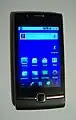 Huawei U8500
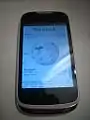 Huawei 8560 Sonic
 Huawei U8800
 Huawei G6600 (MTC 635)
- Huawei M835
- Huawei U121
- Huawei U1220S
- Huawei U1250
- Huawei U2801
- Huawei U7510
- Huawei U7519
- Huawei U8110
- Huawei IDEOS U8150
- Huawei U8220
- Huawei U8230
- Huawei U8350
- Huawei U8500
- Huawei U8510 (IDEOS X3)
- Huawei U8560 Sonic
- Huawei U8800 (IDEOS X5)
- Huawei U8860 (Honor)
- Huawei G6600 (MTC 635)
- Huawei ShotX
Weblinks
Einzelnachweise
- Deng Li: Breaking: Huawei P Series rebrands as ‘Huawei Pura Series’. In: Huawei Central. 15. April 2024, abgerufen am 17. April 2024 (amerikanisches Englisch).
- Hannes Brecher: Huawei enthüllt Pura 70 Ultra mit 1 Zoll Teleskop-Kamera mit variabler Blende, sowie Pura 70, Pura 70 Pro und Pro+. 18. April 2024, abgerufen am 19. April 2024.
- Hannes Brecher: Huawei P70 wird zu Pura 70, Teaser bestätigt dreieckiges Kameramodul. 15. April 2024, abgerufen am 17. April 2024.
- Huawei nova - Full phone specifications. Abgerufen am 9. Mai 2017 (amerikanisches Englisch).
- Huawei nova plus - Full phone specifications. Abgerufen am 9. Mai 2017 (amerikanisches Englisch).
- Huawei nova 2 - Full phone specifications. Abgerufen am 8. April 2021 (amerikanisches Englisch).
- Huawei nova 5T - Full phone specifications. Abgerufen am 8. April 2021 (amerikanisches Englisch).
- Huawei P8 - Full phone specifications. Abgerufen am 10. Mai 2017 (amerikanisches Englisch).
- Huawei P8lite - Full phone specifications. Abgerufen am 10. Mai 2017 (amerikanisches Englisch).
- Huawei P8max - Full phone specifications. Abgerufen am 10. Mai 2017 (amerikanisches Englisch).
- Huawei P9 - Full phone specifications. Abgerufen am 10. Mai 2017 (amerikanisches Englisch).
- Huawei P9 Plus - Full phone specifications. Abgerufen am 10. Mai 2017 (amerikanisches Englisch).
- Huawei P10 - Full phone specifications. Abgerufen am 10. Mai 2017 (amerikanisches Englisch).
- Huawei P10 Lite - Full phone specifications. Abgerufen am 10. Mai 2017 (amerikanisches Englisch).
- Huawei P10 Plus - Full phone specifications. Abgerufen am 10. Mai 2017 (amerikanisches Englisch).
- Huawei P30 Technische Daten | Huawei. 14. April 2022, abgerufen am 14. April 2022 (deutsch).
- Das Huawei P40 Pro im Test | Techgarage. 26. März 2020, abgerufen am 26. März 2020 (Schweizer Hochdeutsch).
- Huawei: Offenbar keine Ascend-Smartphones mehr. In: Notebookcheck. (notebookcheck.com [abgerufen am 9. Mai 2017]).
- Ascend Mate: Bringt Huawei bald Nachfolger mit höherer Display-Auflösung? Abgerufen am 30. August 2022 (amerikanisches Englisch).
- Huawei Ascend G300 - Full phone specifications. Abgerufen am 9. Mai 2017 (amerikanisches Englisch).
- Huawei Ascend G312 - Full phone specifications. Abgerufen am 9. Mai 2017 (amerikanisches Englisch).
- Huawei Ascend G330D U8825D - Full phone specifications. Abgerufen am 9. Mai 2017 (amerikanisches Englisch).
- Huawei Ascend G330 - Full phone specifications. Abgerufen am 9. Mai 2017 (amerikanisches Englisch).
- Huawei Ascend G500 - Full phone specifications. Abgerufen am 9. Mai 2017 (amerikanisches Englisch).
- Huawei Ascend G350 - Full phone specifications. Abgerufen am 9. Mai 2017 (amerikanisches Englisch).
- Huawei Ascend G510 - Full phone specifications. Abgerufen am 9. Mai 2017 (amerikanisches Englisch).
- Huawei Ascend G525 - Full phone specifications. Abgerufen am 9. Mai 2017 (amerikanisches Englisch).
- Huawei Ascend G526 - Full phone specifications. Abgerufen am 9. Mai 2017 (amerikanisches Englisch).
- Huawei Ascend G535 - Full phone specifications. Abgerufen am 9. Mai 2017 (amerikanisches Englisch).
- Huawei Ascend G600 - Full phone specifications. Abgerufen am 9. Mai 2017 (amerikanisches Englisch).
- Huawei G610s - Full phone specifications. Abgerufen am 9. Mai 2017 (amerikanisches Englisch).
- Huawei Ascend G615 - Full phone specifications. Abgerufen am 9. Mai 2017 (amerikanisches Englisch).
- Huawei Ascend G620s - Full phone specifications. Abgerufen am 9. Mai 2017 (amerikanisches Englisch).
- Huawei Ascend G630 - Full phone specifications. Abgerufen am 9. Mai 2017 (amerikanisches Englisch).
- Huawei Ascend G6 - Full phone specifications. Abgerufen am 9. Mai 2017 (amerikanisches Englisch).
- Huawei Ascend G6 4G - Full phone specifications. Abgerufen am 9. Mai 2017 (amerikanisches Englisch).
- Huawei G8 - Full phone specifications. Abgerufen am 10. Mai 2017 (amerikanisches Englisch).
- Huawei Honor 5X - Full phone specifications. Abgerufen am 10. Mai 2017 (amerikanisches Englisch).
- Huawei Honor 5c - Full phone specifications. Abgerufen am 10. Mai 2017 (amerikanisches Englisch).
- Huawei Honor 6X - Full phone specifications. Abgerufen am 10. Mai 2017 (amerikanisches Englisch).
- Huawei P8 Lite (2017) - Full phone specifications. Abgerufen am 10. Mai 2017 (amerikanisches Englisch).
- Huawei Y360 - Full phone specifications. Abgerufen am 10. Mai 2017 (amerikanisches Englisch).
- Huawei Y560 - Full phone specifications. Abgerufen am 10. Mai 2017 (amerikanisches Englisch).
- Huawei Y6 - Full phone specifications. Abgerufen am 10. Mai 2017 (amerikanisches Englisch).
- Huawei Y6 Pro - Full phone specifications. Abgerufen am 10. Mai 2017 (amerikanisches Englisch).
- Huawei Y3II - Full phone specifications. Abgerufen am 10. Mai 2017 (amerikanisches Englisch).
- Huawei Y5II - Full phone specifications. Abgerufen am 10. Mai 2017 (amerikanisches Englisch).
- Huawei Honor Holly 3 - Full phone specifications. Abgerufen am 10. Mai 2017 (amerikanisches Englisch).
- Huawei Y5 (2017) - Full phone specifications. Abgerufen am 10. Mai 2017 (amerikanisches Englisch).