Zeta Sagittarii
| Doppelstern ζ Sagittarii | ||||||||||||||||||||||||||||||||
|---|---|---|---|---|---|---|---|---|---|---|---|---|---|---|---|---|---|---|---|---|---|---|---|---|---|---|---|---|---|---|---|---|
  | ||||||||||||||||||||||||||||||||
| Beobachtungsdaten Äquinoktium: J2000.0, Epoche: J2000.0 | ||||||||||||||||||||||||||||||||
| AladinLite | ||||||||||||||||||||||||||||||||
| Sternbild | Schütze | |||||||||||||||||||||||||||||||
| Rektaszension | 19h 02m 36,7s[1] | |||||||||||||||||||||||||||||||
| Deklination | −29° 52′ 48″[1] | |||||||||||||||||||||||||||||||
| Scheinbare Helligkeit [1] | 2,6 mag | |||||||||||||||||||||||||||||||
| Astrometrie | ||||||||||||||||||||||||||||||||
| Radialgeschwindigkeit | +24,7 ± 0,7 km/s | |||||||||||||||||||||||||||||||
| Parallaxe | 36,98 ± 0,87 mas[1] | |||||||||||||||||||||||||||||||
| Entfernung [1] | 88,2 ± 2,1 Lj (27,0 ± 0,6 pc) | |||||||||||||||||||||||||||||||
| Orbit | ||||||||||||||||||||||||||||||||
| Periode | 21,00 ± 0,01 a | |||||||||||||||||||||||||||||||
| Große Halbachse | 0″,489 ± 0″,001 | |||||||||||||||||||||||||||||||
| Exzentrizität | 0,211 ± 0,001 | |||||||||||||||||||||||||||||||
| Bahnneigung | 111°,1 ± 0°,1 | |||||||||||||||||||||||||||||||
| Argument des Knotens | 74°,0 ± 0°,1 | |||||||||||||||||||||||||||||||
| Epoche des Periastrons | JD 2005,99 ± 0,03 | |||||||||||||||||||||||||||||||
| Argument der Periapsis | 7°,2 ± 0°,6 | |||||||||||||||||||||||||||||||
| Einzeldaten | ||||||||||||||||||||||||||||||||
| Namen | A; B | |||||||||||||||||||||||||||||||
| Physikalische Eigenschaften: | ||||||||||||||||||||||||||||||||
| Absolute vis. Helligkeit Mvis |
A | 1,11 ± 0,05 mag | ||||||||||||||||||||||||||||||
| B | 1,32 ± 0,05 mag | |||||||||||||||||||||||||||||||
| Andere Bezeichnungen und Katalogeinträge | ||||||||||||||||||||||||||||||||
| ||||||||||||||||||||||||||||||||
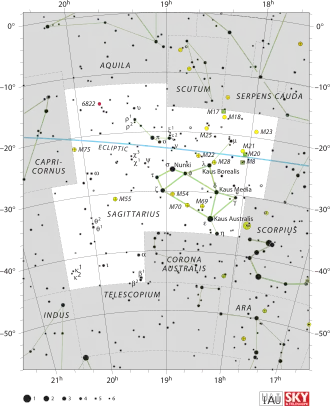
Zeta Sagittarii (ζ Sagittarii, kurz ζ Sgr) ist ein knapp 90 Lichtjahre entferntes Sternsystem im Schützen. Es handelt sich um ein Doppelsystem zweier A-Sterne und vermutlich einer weiteren, weniger leuchtkräftigen Komponente. Das Sternpaar weist eine Gesamtmasse von 5,26 ± 0,37 Sonnenmassen auf und hat eine scheinbare Gesamthelligkeit von 2,6 mag. Zeta Sagittarii trägt den (historischen) Eigennamen Askella bzw. Ascella (lat. „die Achsel“).
Literatur
- De Rosa et al. (2012): The Volume-limited A-Star (VAST) survey – II. Orbital motion monitoring of A-type star multiples. In: Monthly Notices of the Royal Astronomical Society 422(4), S. 2765–2785.
Quellen
This article is issued from Wikipedia. The text is licensed under Creative Commons - Attribution - Sharealike. Additional terms may apply for the media files.